

Patagonia R1 Ultralight Hoody: Lightest R1 Climbing Fleece for 2026
Patagonia just added the lightest fleece in the R1 series. The R1 Ultralight Hoody hits 9.87 ounces on a 100% recycled polyester body, runs a smoother abrasion-resistant face fabric than older R1 grids, and lands as the latest piece in Patagonia's Free Wall Kit for cold-weather climbing. $199, live now on patagonia.com. Coal Orange leads the colorway palette.

What it is
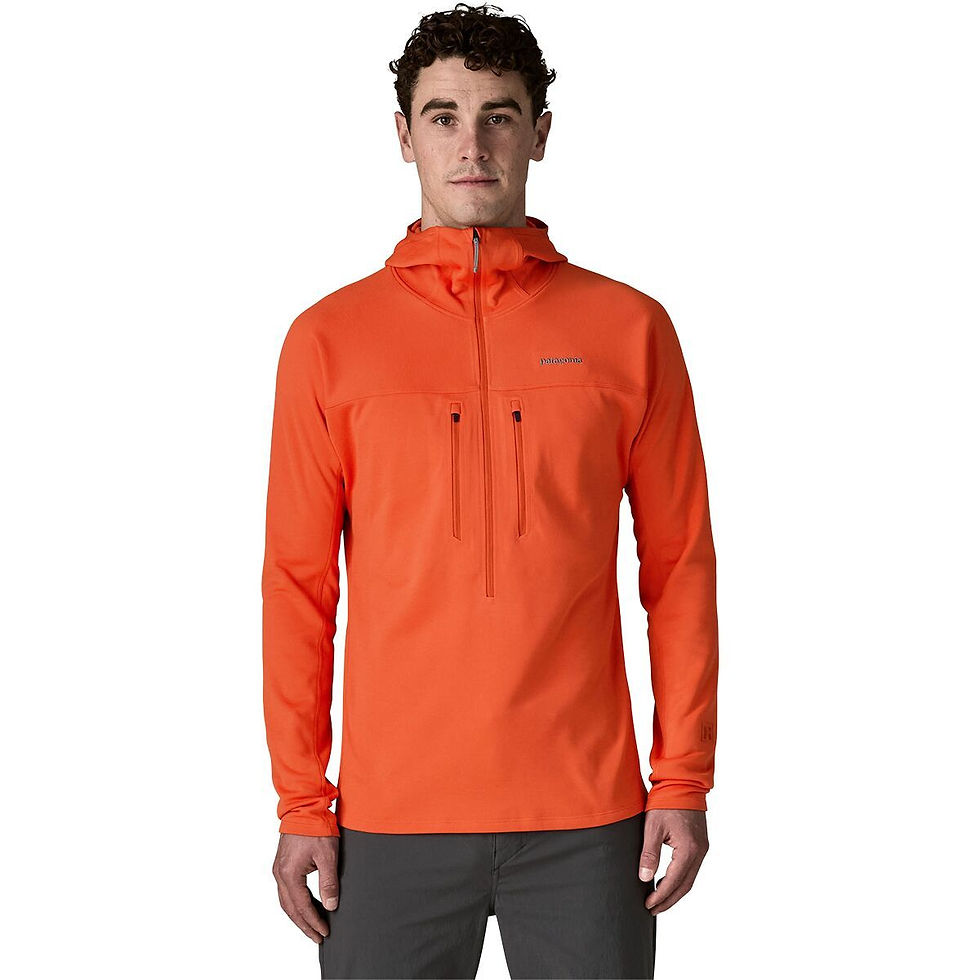
The Patagonia R1 Ultralight Hoody is a technical climbing fleece built as part of Patagonia's Free Wall Kit. Slim cut. Helmet-compatible hood. Single-panel sleeve construction. Smooth, abrasion-resistant face fabric over a soft R1 interior. 100% recycled polyester. 9.87 ounces. Available in men's and women's cuts in multiple colorways. The piece sits between the R1 Hoody original and the R1 Air Hoody in the broader R1 family, slotting in as the lightest, slimmest member built specifically for under-harness climbing use. $199 on the Patagonia US site, shipping now.
Specs that matter
The R1 Ultralight Hoody is the lightest R1 yet, but the spec that earns it the pick is the smooth face fabric, not the weight number. Here is the full block.
Weight: 9.87 oz / 280 g
Material: 100% recycled polyester
Face fabric: Smooth, abrasion-resistant
Construction: Single-panel sleeves
Hood: Helmet-compatible
Cut: Slim
Price: $199
Use: Cold-weather climbing
The smooth face is the spec story. Older R1 grids have a textured outer face that catches against rope bags and harness gear loops, which causes pilling over a season. The Ultralight runs a flatter knit on the outside that resists snags. Reviewers note that durability shows up in the second season; first-season performance feels similar to other R1s.
Materials & construction
Patagonia switched to 100% recycled polyester across the Spring 2026 R1 refresh. The Ultralight is the first in the family built from that fabric from the start, not retrofitted. The recycled polyester has the same hand and warmth-to-weight as the prior virgin polyester, with a slight gain in durability tied to the fiber-bond process.
Single-panel sleeve construction is a deliberate choice for under-harness use. Most fleeces use a two-panel sleeve with a seam running down the underside or the back of the arm. That seam abrades against shoulder strap buckles and harness gear loops. The single-panel construction eliminates that abrasion point entirely. The trade-off is slightly more complex pattern cutting and slightly more fabric waste, both of which Patagonia accepts as part of the technical brief.
The hood uses a slimmer neck volume than the original R1 hoody. That detail matters specifically for climbing. A wider hood neck volume bunches at the back of the neck when a helmet is on, which causes hot spots after a few hours. The Ultralight hood sits flatter against the cervical spine.

Who it's for
The R1 Ultralight Hoody is for climbers and alpinists who run fleeces hard. Multi-pitch trad days where the fleece spends 4 hours under a harness. Big-wall climbers stacking the layer under a shell. Alpine missions where the fleece has to layer cleanly under a hard shell and a belay parka without bunching. Ice climbers who want a slim baselayer-grade fleece under a heavy hard shell.
If you are a casual day-hiker who wants a Patagonia hoody for around-town use, this is too technical and too pricey. The standard Patagonia Better Sweater or even the original R1 Air Hoody covers casual use better. If you want the warmest R1, the original R1 Hoody is still warmer at the cost of weight.
The right user is the climber who shows up to a route in the spring shoulder season, knows they will rotate through a baselayer, fleece, hard shell, and belay parka over the day, and wants every layer to play nice with the others.

How it compares
Three named comparisons for the climber researching this purchase.
Versus the original R1 Hoody. The original is heavier at roughly 13.6 oz and warmer per square inch. The Ultralight saves nearly 4 ounces and runs a smoother face. Pick the original for cold belay use, the Ultralight for active climbing where weight wins.
Versus the Patagonia R1 Air Hoody. The R1 Air uses a hollow-core fiber for warmth-to-weight at a higher price ($229). The R1 Ultralight is lighter at $199 with better abrasion resistance. Pick the Air for stop-and-go winter alpine, the Ultralight for active climbing.
Versus the Arc'teryx Rho Hoody. The Arc'teryx is the obvious cross-shop. Both target slim-cut technical climbing fleece. The R1 Ultralight wins on weight and price; the Rho runs a slightly heavier knit with a different aesthetic. Climbers who layer Arc'teryx top to bottom often pick the Rho; climbers building a kit a piece at a time look at the R1 Ultralight as the spec leader.
Where it shines (and where it doesn't)
It shines on multi-pitch trad climbing days. Big-wall layering under a shell. Active alpine climbing where weight matters and abrasion resistance matters more. Spring shoulder season missions where one fleece has to play multiple roles.
It does not shine as a casual hoody. The slim cut feels restrictive when worn over jeans or daily clothes. It also runs cooler than the original R1, so for sub-freezing belay use it pairs better with a belay parka than as a standalone insulator. The price is at the high end for an ultralight fleece.

Where to buy Patagonia R1 Ultralight Hoody
The Patagonia R1 Ultralight Hoody is live on patagonia.com at $199. Available in men's and women's cuts in Coal Orange and additional standard Patagonia palette colorways. Shipping now.
The hoody also stocks at most authorized Patagonia retailers including REI Co-op, Backcountry, and specialty climbing shops.
The bottom line
The R1 Ultralight Hoody is the right fleece for climbers and alpinists who need a slim, durable, technical layer under a harness. Skip it for casual around-town use. The deeper why is that the smooth abrasion-resistant face fabric is a meaningful upgrade over older R1 grids, and the durability shows up in the second season.
Specs and pricing accurate as of 2026-05-11 when this post was published. Check the brand page for current availability and colorways.
FAQ
How heavy is the Patagonia R1 Ultralight Hoody?
The Patagonia R1 Ultralight Hoody weighs 9.87 ounces, which is roughly 280 grams. That makes it the lightest hoody in the R1 series. Most technical fleeces in the same warmth class run 11 to 14 ounces, so the R1 Ultralight saves a meaningful amount of weight in a layered climbing kit.
What is the Free Wall Kit?
The Patagonia R1 Ultralight Hoody is part of Patagonia's Free Wall Kit, which is the brand's curated layering system for big-wall and cold-weather climbing. The kit pairs the Ultralight Hoody with technical pants, a hard shell, and a belay parka. The cuts and fabrics across the kit are designed to layer cleanly without bunching.
Is the R1 Ultralight Hoody a baselayer or a midlayer?
The Patagonia R1 Ultralight Hoody works as either depending on the weather. Worn next to skin, it acts as a warm baselayer with a smooth face under a shell. Worn over a thin baselayer, it acts as a light midlayer. The 9.87 oz weight gives it that flexibility.
Does the R1 Ultralight Hoody have a helmet-compatible hood?
Yes. The Patagonia R1 Ultralight Hoody hood is shaped to slip cleanly under a climbing helmet. The neck volume runs slightly slimmer than the original R1 hoody to reduce bunching at the nape when the helmet is on.
What is the R1 Ultralight Hoody made of?
The Patagonia R1 Ultralight Hoody is made of 100% recycled polyester. The face fabric runs a smoother knit than older R1 grids to resist pilling and abrasion against rope bags, shoulder straps, and harness gear loops. The interior keeps the soft R1 hand.
How much does the Patagonia R1 Ultralight Hoody cost?
The Patagonia R1 Ultralight Hoody is priced at $199 on the Patagonia US site. That sits below the R1 Air Hoody at $229 and slightly above the older R1 Hoody refresh price. Pricing is consistent across authorized Patagonia retailers.
Should I size up in the R1 Ultralight Hoody?
The Patagonia R1 Ultralight Hoody runs slim by design so it can fit under a harness and a shell without bunching. If you wear it as your only layer or want room for a thicker baselayer underneath, size up one. If you wear it as a mid layer in a layered kit, take your standard Patagonia size.


Comments